
Landscape and Portrait in Watercolor
Portraits where trees, roots, and landscapes become part of the same visual story.
The Landscape in My Portraits
A traditional portrait focuses primarily on a person’s physical appearance. In my portraits, I incorporate elements of nature to suggest less visible aspects of identity. The landscape provides context, meaning, and depth to the image, becoming an essential part of the story each artwork tells.
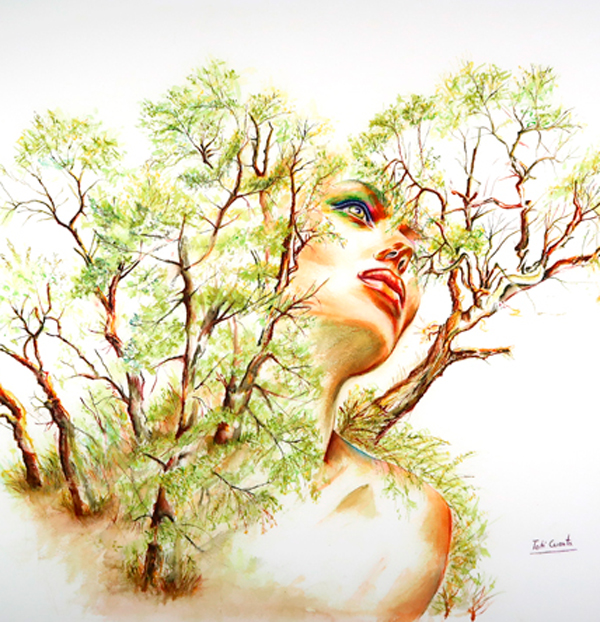
In my watercolors, the landscape is much more than a setting. Trees, roots, mountains, and rivers appear integrated into the human figure because they allow me to expand what a portrait can express.
Symbolic Language in My Work
Much of my work develops through visual symbols. Nature offers me a universal language capable of conveying complex ideas in an intuitive way.
Roots can evoke origin and memory. Branches suggest growth and expansion. A river can represent transformation and movement. These elements do not appear as literal illustrations of an idea, but as part of a composition open to interpretation.
Through them, I create images in which the portrait ceases to be merely a physical representation and becomes an exploration of human experience through symbolism
About Me
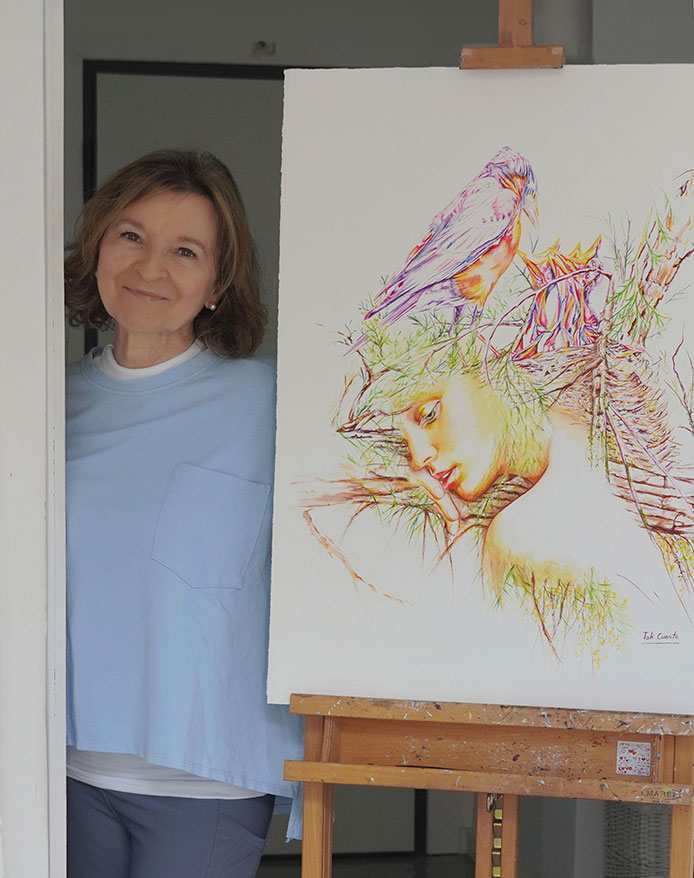
I am a watercolor artist, and my work focuses on the human figure, nature, and symbolism. Through watercolor, I explore different ways of representing feminine identity, creating images where emotion, imagination, and reality coexist within the same composition.
My series feature women, landscapes, and symbolic elements that interact with one another to create visual narratives open to interpretation. Portraiture remains one of the central pillars of my work, both in my figurative paintings and in my more symbolic compositions.
Nature as a Symbol in My Watercolors
The landscape occupies a central place within my visual language. Each element brings different nuances and helps me build narratives that remain open to interpretation.
Trees, Roots, and Branches
The tree is one of the most recurring symbols in my work. I associate it with growth, evolution, and the capacity for transformation. Just as a tree develops over time, people go through processes of change that shape their identity.
Roots are associated with origin, memory, and a sense of belonging. They represent what sustains us, even when it is not always visible. They speak of personal history, the places we inhabit, and the bonds that connect us to the Earth.
Branches often symbolize expansion and development. They grow towards the light, multiply, and seek new directions. In my compositions, they frequently act as a natural extension of thought, imagination, and inner growth.
Rivers and Mountains
Rivers represent the flow of life. Water is constantly moving and adapting as it continues its journey. For this reason, it appears in some of my works as a metaphor for life processes and the capacity for transformation that forms part of every human experience.
Mountains convey a different kind of energy. They speak of strength, stability, and permanence. When integrated into a human figure, they often bring a sense of grounding and resilience in the face of difficulties.
Many of these symbols appear repeatedly throughout my series Women Tree and Nature and Consciousness.
The Landscape Becomes Part of the Portrait
When the landscape becomes part of the portrait, nature is no longer something external to the human being. Both become part of the same image and the same visual story.
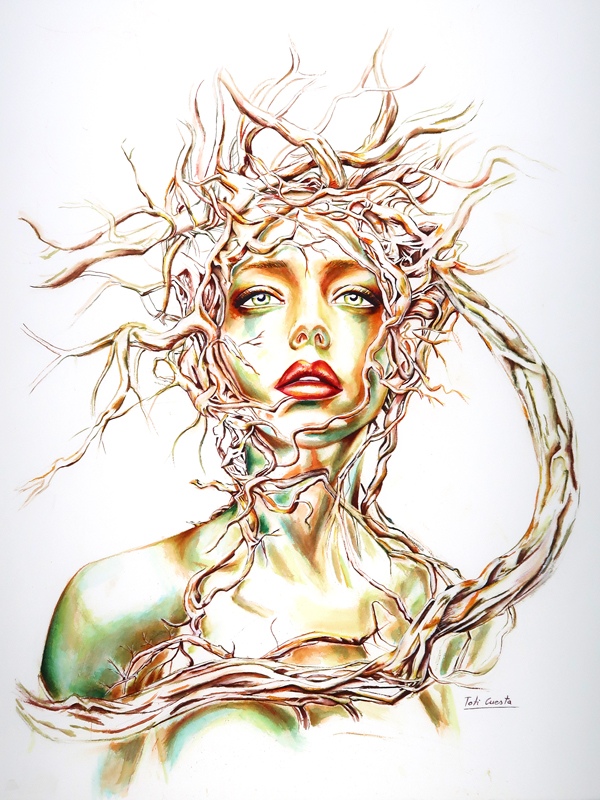
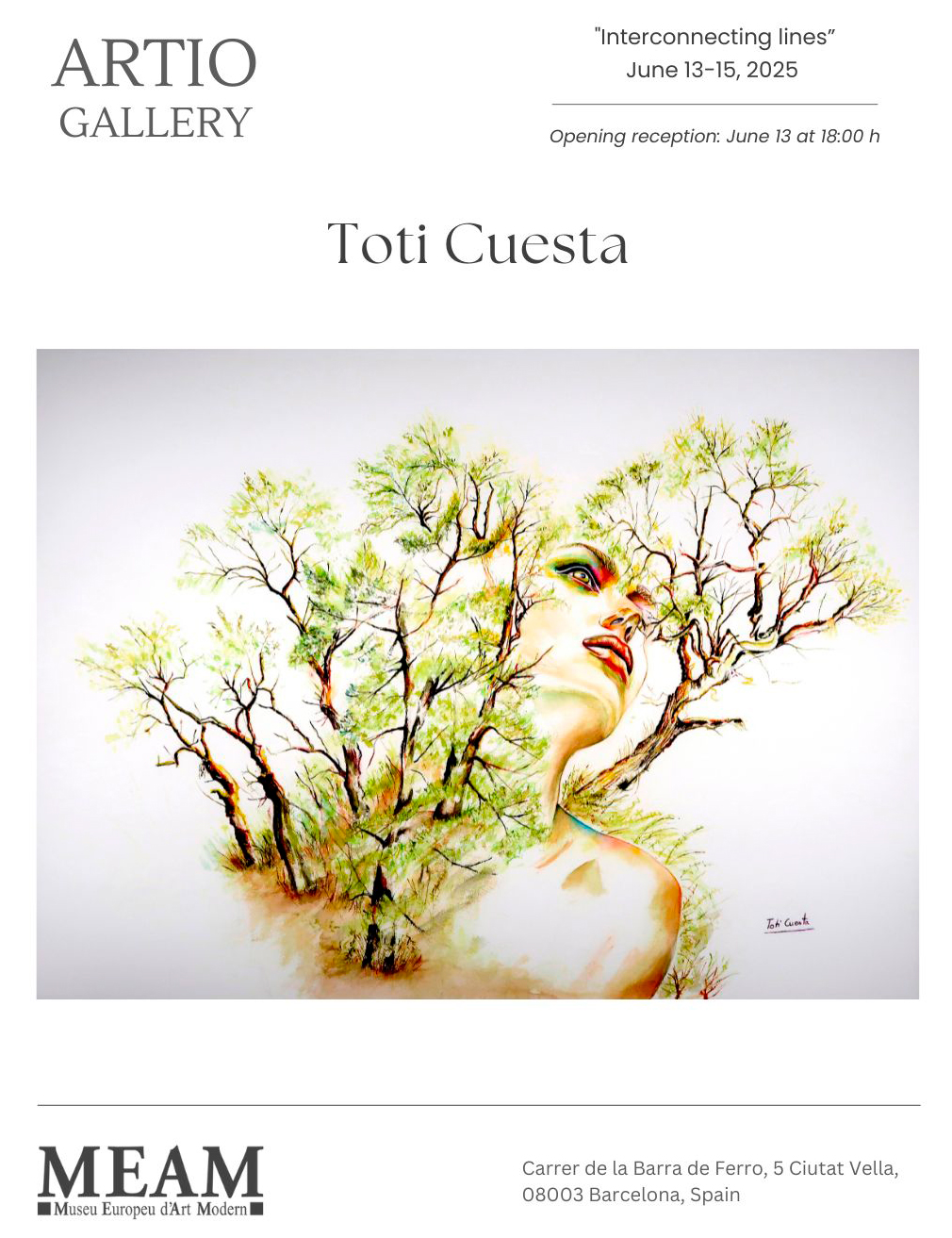
Sometimes a woman appears merged with a tree. At other times, roots become part of her hair, branches extend the movement of the body, or a mountain emerges from within the face.
These images do not seek to reproduce a literal reality. I use symbolic language to represent aspects of human experience that are difficult to express through physical appearance alone.
For this reason, many of my works exist somewhere between portrait and landscape, creating a space where both cease to be independent elements.
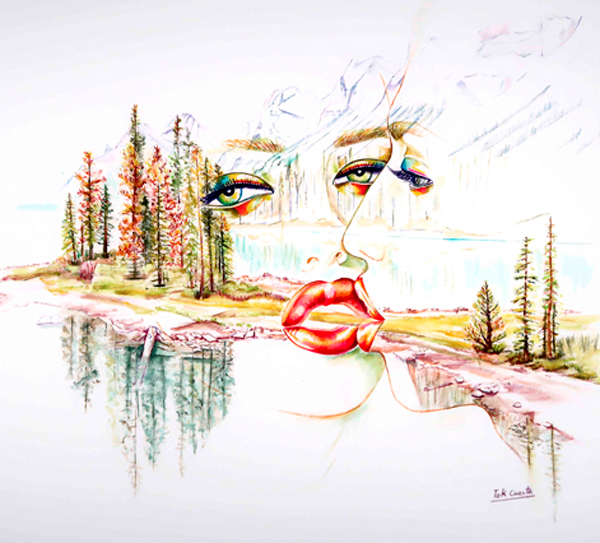
The Female Figure as Part of the Landscape
Identity, transformation, and connection with the natural world
Beyond Physical Appearance
Although my portraits begin with the observation of the human figure, my interest is not limited to a person’s outward appearance. I am interested in exploring aspects related to identity, memory, transformation, and the relationship we maintain with the environment we inhabit.
This is why many of my figures appear connected to elements of the landscape. Through symbolism, I seek to expand the meaning of portraiture and reveal dimensions that are not always visible at first glance. Nature allows me to speak about what changes, grows, remains, or evolves over time.
The Women Tree Series
The integration of the human figure and nature becomes especially important in my Women Tree series. In these works, roots, trunks, and branches cease to belong solely to the landscape and become part of the identity of the figure portrayed.
Through these images, I explore a vision in which human beings and nature do not appear as separate realities, but as parts of the same vital process. The tree becomes a symbol of growth, transformation, and connection with the Earth, while the female figure acts as a bridge between the inner world and the landscape that surrounds her.
Recognition and Exhibitions
My original watercolor portraits have been featured in exhibitions, publications, and artistic projects both nationally and internationally.
Over the years, I have had the opportunity to present my work in galleries, museums, and contemporary art spaces, as well as in specialized art publications.
Each exhibition offers the chance to share my work with new audiences and allows the paintings to establish connections beyond the studio where they were created.
You can explore a selection of exhibitions, publications, and awards in the recognition section of my webs
Color as a Symbolic Language
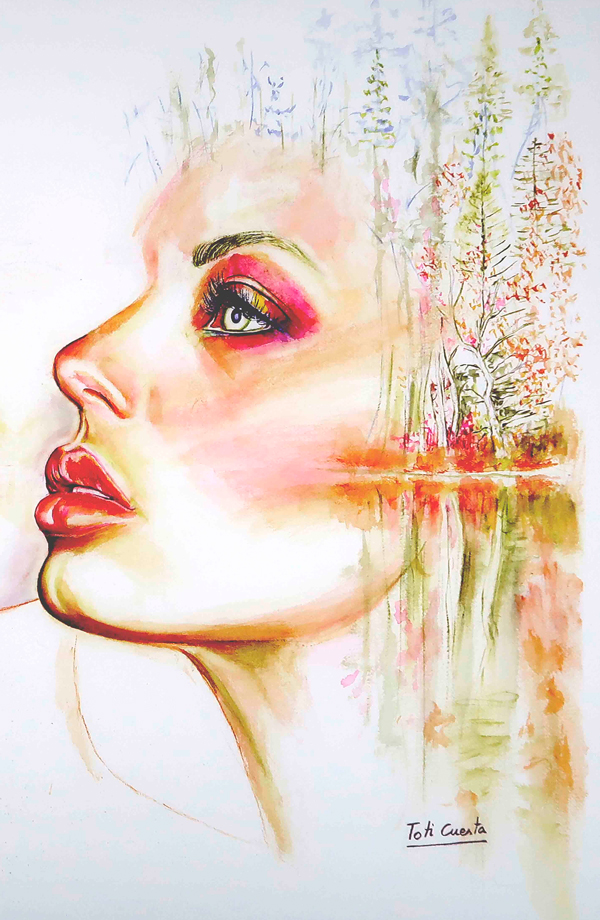
One of the things that often surprises viewers of my portraits is that the colors of the faces differ from natural skin tones. There are blues, greens, fuchsia shadows, and oranges around the eyes because I am not seeking to reproduce only a person’s outward appearance.
Color allows me to convey emotions, sensations, and meanings that go beyond literal representation. A face may take on blue, violet, green, or golden tones because the intention of the artwork is not to copy reality, but to create an image capable of communicating something deeper.
In the same way that I use trees or roots as visual symbols, I also use color as an expressive tool within the composition.
Discover My Watercolor Landscapes and Portraits
If you would like to learn more about my work, you can explore the Women Tree and Nature and Consciousness series, discover my original watercolor portraits, or learn more about my artistic journey on the About Me page.